
GLP-1 + Strength Training: The Perimenopause Fat-Loss Stack
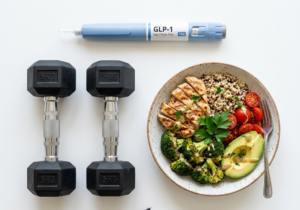
GLP-1 + Strength Training: The Perimenopause Fat-Loss Stack
If you are using a GLP-1 medication, or considering one during perimenopause, the number on the scale is only part of the picture. Yes, GLP-1 medications can help you lose weight, reduce food cravings, and improve blood sugar control. But the way you lose that weight matters just as much as the amount you lose. Without the right strategy, some of that weight loss can come from muscle instead of fat. During perimenopause, when natural hormonal changes are already reducing muscle mass, that can affect your metabolism, energy, strength, and your ability to keep the weight off over time. The good news is that there is a simple solution. Pairing GLP-1 therapy with strength training and adequate protein creates a powerful fat loss strategy that helps protect muscle while improving your long-term health.
Why GLP-1 Medications Are So Effective
GLP-1 receptor agonists, including medications such as semaglutide and tirzepatide, have transformed medical weight management. These medications work by helping regulate appetite and blood sugar, making it easier for many women to eat less without constantly fighting hunger. Many women notice benefits such as:
- Reduced food cravings
- Less food noise throughout the day
- Improved insulin sensitivity
- Better portion control
- Significant weight loss when combined with healthy lifestyle habits
For women struggling with weight gain during perimenopause, GLP-1 medications can be an effective medical option when prescribed by an experienced healthcare provider. However, there is one important consideration that deserves more attention.
The Hidden Risk of GLP-1 Weight Loss
Weight loss is not always the same as fat loss. Whenever you lose weight quickly, especially while eating significantly fewer calories, your body can lose both body fat and lean muscle. Studies have shown that a meaningful percentage of weight lost while taking GLP-1 medications may come from lean body mass if muscle is not actively protected. While losing excess body fat improves health, losing too much muscle can create new challenges, particularly during midlife. This is why simply celebrating a lower number on the scale does not always tell the whole story. The goal should be to improve body composition by reducing fat while maintaining as much lean muscle as possible.
Why Muscle Matters More During Perimenopause
Many people think muscle only affects appearance. In reality, muscle is one of the most metabolically active tissues in your body. Healthy muscle helps:
- Burn more calories throughout the day
- Support a healthy metabolism
- Improve insulin sensitivity
- Regulate blood sugar
- Maintain physical strength
- Support balance and mobility
- Help protect bone density
As estrogen levels decline during perimenopause, women naturally begin losing muscle while body fat becomes more likely to accumulate around the abdomen. According to the National Institute on Aging, age-related muscle loss becomes increasingly common after age 40 and can affect both strength and overall health. Adding unnecessary muscle loss during GLP-1 treatment can make these natural changes even more significant.
The Perimenopause Double Challenge With GLP-1
Perimenopause already places extra stress on your metabolism. As estrogen fluctuates, many women experience:
- Reduced muscle mass
- Increased belly fat
- Lower energy
- Reduced bone density over time
- Changes in insulin sensitivity
Now combine those changes with the reduced calorie intake that often comes with GLP-1 medications. Without enough resistance exercise and protein, your body has fewer reasons to maintain muscle tissue. This helps explain why some women say they have lost weight but still feel:
- Weaker
- Less toned
- More fatigued
- Softer than expected
In some cases, losing too much muscle can also make it harder to maintain weight loss after stopping medication because muscle plays an important role in daily calorie burning. The medication is doing its job. The missing piece is protecting lean muscle throughout the process.
The GLP-1 Fat-Loss Stack
The most effective approach is surprisingly simple. Two habits work together to help preserve muscle while maximizing fat loss during GLP-1 treatment.
Part One: Make Strength Training Non-Negotiable
Strength training is one of the most important ways to tell your body to preserve muscle during weight loss. Every time you lift weights, your muscles receive a signal that they are needed. Aim for two to four strength training sessions each week. Focus on compound exercises that work multiple muscle groups at once, including:
- Squats
- Deadlifts or hip hinges
- Lunges
- Rows
- Chest presses
- Shoulder presses
As you become stronger, gradually increase the resistance or the number of repetitions. Progressive overload encourages your muscles to adapt rather than disappear during a calorie deficit. Many women assume more cardio is the answer. While walking, cycling, and other cardiovascular activities are excellent for heart health, they do not preserve muscle as effectively as resistance training during GLP-1 weight loss.
Part Two: Prioritize Protein at Every Meal
One of the biggest reasons women lose muscle while taking GLP-1 medications is surprisingly simple. They are not eating enough protein. Because GLP-1 medications reduce appetite so effectively, many women unintentionally eat much less overall. Protein intake is often the first nutrient to fall. Protein provides the amino acids your body needs to repair and maintain muscle tissue. Simple strategies include:
- Eat protein first during every meal.
- Include protein with every snack.
- Avoid skipping meals simply because you are not hungry.
- Plan balanced meals even when your appetite is low.
- Work with a registered dietitian to determine your ideal daily protein intake.
The Academy of Nutrition and Dietetics recommends individualized nutrition plans because protein needs vary based on age, activity level, body size, and overall health.
Why GLP-1 Alone Is Not Enough
Think of GLP-1 as one piece of a larger plan. The medication helps create the calorie deficit needed for weight loss. Strength training helps preserve muscle. Protein provides the building blocks needed to maintain that muscle. Together, they help improve body composition rather than simply lowering body weight. This combination supports:
- Greater fat loss
- Better muscle preservation
- A healthier metabolism
- Improved strength
- Better blood sugar regulation
- More sustainable weight management
Instead of simply becoming lighter, your goal becomes becoming stronger and healthier.
Is This GLP-1 Strategy Right for You?
Every woman is different. Some women benefit tremendously from GLP-1 medications, while others may have different medical needs or treatment goals. The decision to start GLP-1 therapy should always be made with your healthcare provider after reviewing your medical history, current medications, and overall health. At Dr. Jennifer Roelands, we take a comprehensive approach to perimenopause and weight management. That means looking beyond the scale to protect muscle, support metabolic health, and create lasting results. When GLP-1 medications are combined with strength training, adequate protein, and personalized medical care, women often achieve healthier and more sustainable outcomes than relying on medication alone.
Final Thoughts
The biggest misconception about GLP-1 medications is that losing weight automatically means improving health. It does not. What truly matters is what you lose. If you protect your muscle through regular strength training and adequate protein, your GLP-1 journey becomes about much more than a smaller number on the scale. It becomes a strategy for building a stronger body, supporting your metabolism, protecting your bones, and improving your health well beyond perimenopause.
Frequently Asked Questions
Yes. Rapid weight loss from GLP-1 medications can include both fat and lean muscle, especially if protein intake is too low and resistance training is not part of your routine.
Perimenopause naturally accelerates muscle loss due to declining estrogen levels. Preserving muscle helps support metabolism, blood sugar regulation, strength, and bone health.
Most women benefit from strength training two to four times per week using compound exercises that target multiple muscle groups.
Protein needs vary based on age, body size, activity level, and health conditions. Your healthcare provider or registered dietitian can recommend an appropriate daily intake for your goals.
Cardio supports heart health, but it is not the most effective way to preserve muscle during weight loss. Resistance training combined with adequate protein is much more effective for maintaining lean mass.
Long-term success depends on healthy habits developed during treatment. Preserving muscle through strength training and proper nutrition can help support a healthier metabolism and improve the chances of maintaining weight loss.

About the author
Jennifer Roelands, MD is double board certified in Obstetrics and Gynecology and in Integrative Medicine. She earned her medical degree at the University of California San Diego, completed her residency at Duke, and completed her integrative medicine fellowship at the Andrew Weil Center. She is the founder of Precision Health MD and the Midlife Upgrade Academy.
Her book, PIVOT: The Perimenopausal Woman’s Guide to the Decade That Decides How You Age, is available for pre-order at drjenniferroelands.com/PIVOTBOOK
This article is for educational purposes only and is not medical advice. Always speak with your own

Are You in Perimenopause?
Take my 90-second quiz✓
Built by a board-certified OB-GYN
New videos weekly